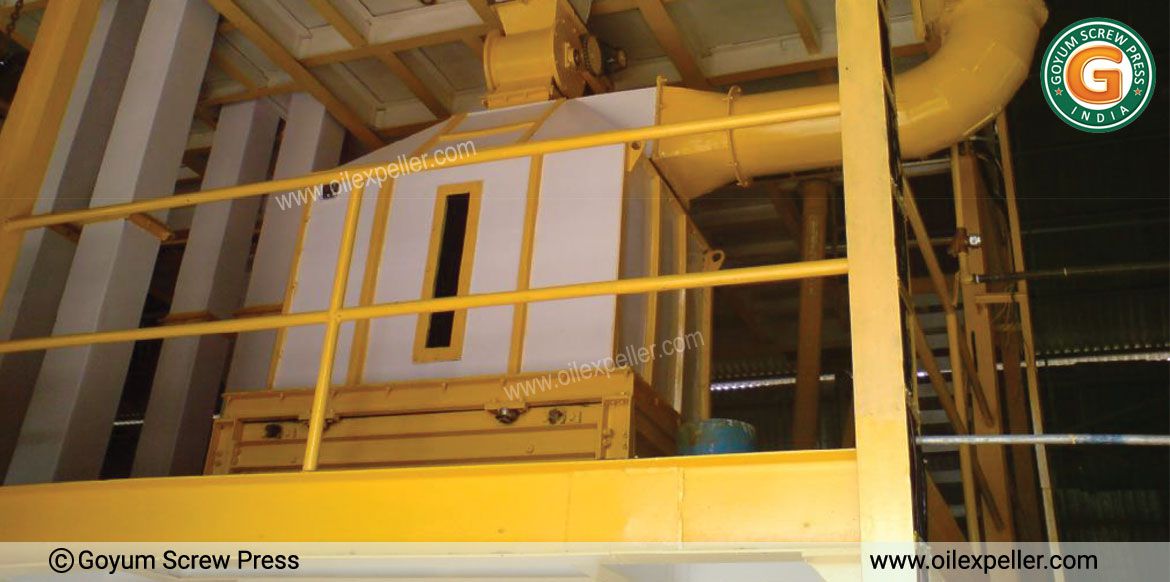
Nous sommes des leaders dans le domaine de la conception, de la fabrication et de l’installation d’usines d’alimentation animale de type horizontal et vertical – usines d’alimentation pour bétail, usines d’alimentation pour volaille, usines d’alimentation pour lapins, usines d’alimentation pour poissons et porcs. Nos installations, de structure simple, d’utilisation et d’entretien faciles, sûres en termes de solidité, de petit volume et de poids léger.
Feed Processing Solutions We Can Offer:
GOYUM propose un projet de production d’aliments clés en main comprenant la conception du projet, la fabrication d’équipements, l’installation et la mise en service de l’usine d’alimentation, ainsi que la formation sur site des technologies de contrôle électrique, d’exploitation de l’usine et de traitement des aliments.
Nos usines de transformation d’aliments pour animaux sont de conception modulaire et basées sur différentes exigences en matière d’aliments pour animaux et les besoins des clients. Grâce à des machines innovantes et à une connaissance approfondie des processus, nos équipements sont le meilleur choix pour les meuniers pour produire des aliments de haute qualité et sûrs pour une efficacité maximale de leurs clients. La technologie sous-jacente à notre usine de transformation d’aliments pour animaux garantit la production d’aliments pour animaux répondant aux exigences d’hygiène les plus rigoureuses tout en atténuant la contamination croisée.
Usine verticale de poisson, de volaille et d’aliments pour animaux
Nous offrons à nos clients une usine d’alimentation animale verticale conçue avec précision, fabriquée à partir de matériaux MS (acier allié) de qualité supérieure et pouvant être fabriquée sur mesure selon les exigences spécifiques de nos clients.

Vertical Pelletizer
Caractéristiques de l’usine verticale d’alimentation animale
- Capacité de travail 1 tonne par heure à 10 tonnes par heure.
- Modèle disponible de 24 CV à 125 CV.
- Corps en acier fabriqué.
- Roulements importés.
- Aliments pour volailles et aliments pour animaux.
- Entraînement à vis sans fin de haute précision.
- Faible bruit/vibration.
- SS steam Jacket assure un conditionnement homogène.
- Engrenage/courroie de haute précision.
- Faible entretien.
Spécification de l’usine verticale d’alimentation animale
| Model |
Power |
A |
B |
C |
D |
| GSP 16 |
24 HP |
1010 mm |
795 mm |
590 mm |
415 mm |
| GSP 20 |
50 HP |
1105 mm |
930 mm |
720 mm |
510 mm |
| GSP 24 |
80 HP |
1350 mm |
1030 mm |
860 mm |
608 mm |
| GSP 26 |
100 HP |
1380 mm |
1030 mm |
860 mm |
608 mm |
| GSP 30 |
125 HP |
1410 mm |
1030 mm |
860 mm |
608 mm |
Les dimensions sont à titre indicatif uniquement sous réserve de modifications sans préavis
Usine horizontale de poisson, de volaille et d’alimentation animale
Nous offrons à nos clients une usine d’alimentation horizontale de précision qui est fabriquée à partir de matériaux MS (acier allié) de qualité supérieure et peut être fabriquée sur mesure selon les exigences spécifiques de nos clients.

Pelletiseur horizontal
Caractéristiques de l’usine d’alimentation horizontale
- Capacité de travail 1 tonne par heure à 10 tonnes par heure.
- Modèle disponible de 24 CV à 125 CV.
- Corps en acier fabriqué.
- Roulements importés.
- Aliments pour volailles et aliments pour animaux.
- Entraînement à vis sans fin de haute précision.
- Faible bruit/vibration.
- SS steam Jacket assure un conditionnement homogène.
- Entraînement par engrenage/courroie de haute précision.
- Faible entretien.
Spécification de l’usine d’alimentation horizontale
| Model |
Power |
A |
B |
C |
D |
| GSP 16 |
24 HP |
1010 mm |
795 mm |
590 mm |
415 mm |
| GSP 20 |
50 HP |
1105 mm |
930 mm |
720 mm |
510 mm |
| GSP 24 |
80 HP |
1350 mm |
1030 mm |
860 mm |
608 mm |
| GSP 26 |
100 HP |
1380 mm |
1030 mm |
860 mm |
608 mm |
| GSP 30 |
125 HP |
1410 mm |
1030 mm |
860 mm |
608 mm |
Les dimensions sont à titre indicatif uniquement sous réserve de modifications sans préavis
Diagramme de processus de poisson, de volaille ou de poulet et d’usine d’aliments pour animaux / bovins
Cherchez-vous à démarrer une nouvelle usine d’alimentation de poisson, de volaille / de poulet et d’aliments pour animaux ou une expansion supplémentaire ?
L’usine d’alimentation proposée par GOYUM est robuste, polyvalente, fiable et efficace. Cette usine d’alimentation est basée sur une technologie éprouvée qui est non seulement économe en énergie et respectueuse de l’environnement, mais également économique.
In modern systems, automatic weighing of various ingredients according to a batch recipe is called dosing.
This stage incorporates the following:
- A silo of the appropriate capacity depending on the total capacity of the system
- A gravity feeder or screw feeder for controlling and discharging the material in the weighing container below.
Two sets of silos are usually installed. One is for the main component and the other is for the minor component.
Both weighing bins are emptied with one joint for further processing and a bin vibrator or shaking device is attached to some or all of the bins
Weighing is an electronic control system based on a PLC or microprocessor. It is executed through a computer.
The computer controls and records all the details of the batch, weights the ingredients over or under from the target value, and reports on each batch, shift, day, week, month.
The desirable properties of the dosing system are:
- To meet the performance of the facility, it is necessary to be able to perform accurate weighing within the specified time.
- It should be very reliable and function automatically, but it should be manually controllable in the event of an automatic failure. To allow material flow if the container is clogged.
Grinding is done to reduce the material to the required fineness so that it has the maximum surface area exposed to heat and moisture in order to achieve gelatinization in the conditioner.
Being able to grind with minimal energy consumption not only reduces crushing costs, but also saves the energy required for palletisation.
Efficient mixing of trace components throughout the batch is important for producing high quality feed.
The designed features of a good mixing system are:
- Mixing must be done to achieve the minimum coefficient of variation in the minimum amount of time.
- The mixer emptying mechanism should be aimed at minimizing residue in the drum and avoiding leaks at the gate valve to avoid carry-over to the next batch.
Conditioning
Conditioning is done to add heat and moisture to the compound feed to achieve gelatinization and facilitate palletisation of the product.
An ideal conditioning system should do the following:
- It is necessary to raise the temperature and humidity of the product.
- It should have option for both by direct & indirect heating.
After conditioning, a roller is used to feed the product from the nozzle of the pellet press to convert the powdered material into pellets.
The quality and performance of the pellet press depends on many parameters including:
- Grinding Quality
- Conditioning Feed Formulation: (ratio of oil, protein, fiber, etc.)
- Mould Composition
The hot pellets coming out of the pellet mill need to be cooled immediately to remove moisture and heat. As a rule, a counter current cooler is used for this.
The desirable characteristics of the efficient cooler are:
- It should be possible to remove unwanted heat and moisture from the pellets and improve shelf life.
- Also, the cooling should be uniform from all sides
Crumbling is the process of crushing pellets after cooling to make them suitable for small chicks.
You can bypass it if you don’t need it and eject the product from the side of the collapsing roller.
A well-designed crumbler requires the following properties:
- You need to make evenly sized crumbs.
- On both ends of the crumb roll you need to release the material.
- An adequate gap adjustment mechanism.
The products that come out of the crumbs are either pelletized (when the crumbs are finished) or crumbs.
These need to be sifted to get rid of fines and debris.
Single deck shifters are only used to remove fines and double deck shifters are used to remove both fines and above.
Unbroken or debris is returned to the crumbs and the granules are returned to the pelleting line for repulsion.
The screener requires the following features:
- You need to remove the required percentage of fines from the product.
- You need to prevent the screen from getting clogged frequently.
- Changing the sieve of the desired mesh should be quick and easy.
After the screener, the finished product is packed in a bag. For small and medium-sized plants, bagging can be done manually, but for better performance it is advisable to choose an electronic bagging machine.
Cherchez-vous à démarrer une nouvelle usine d’alimentation de poisson, de volaille / de poulet et d’aliments pour animaux ou une expansion supplémentaire ?
L’usine d’alimentation proposée par GOYUM est robuste, polyvalente, fiable et efficace. Cette usine d’alimentation est basée sur une technologie éprouvée qui est non seulement économe en énergie et respectueuse de l’environnement, mais également économique.